
How to Read a Transformer Nameplate
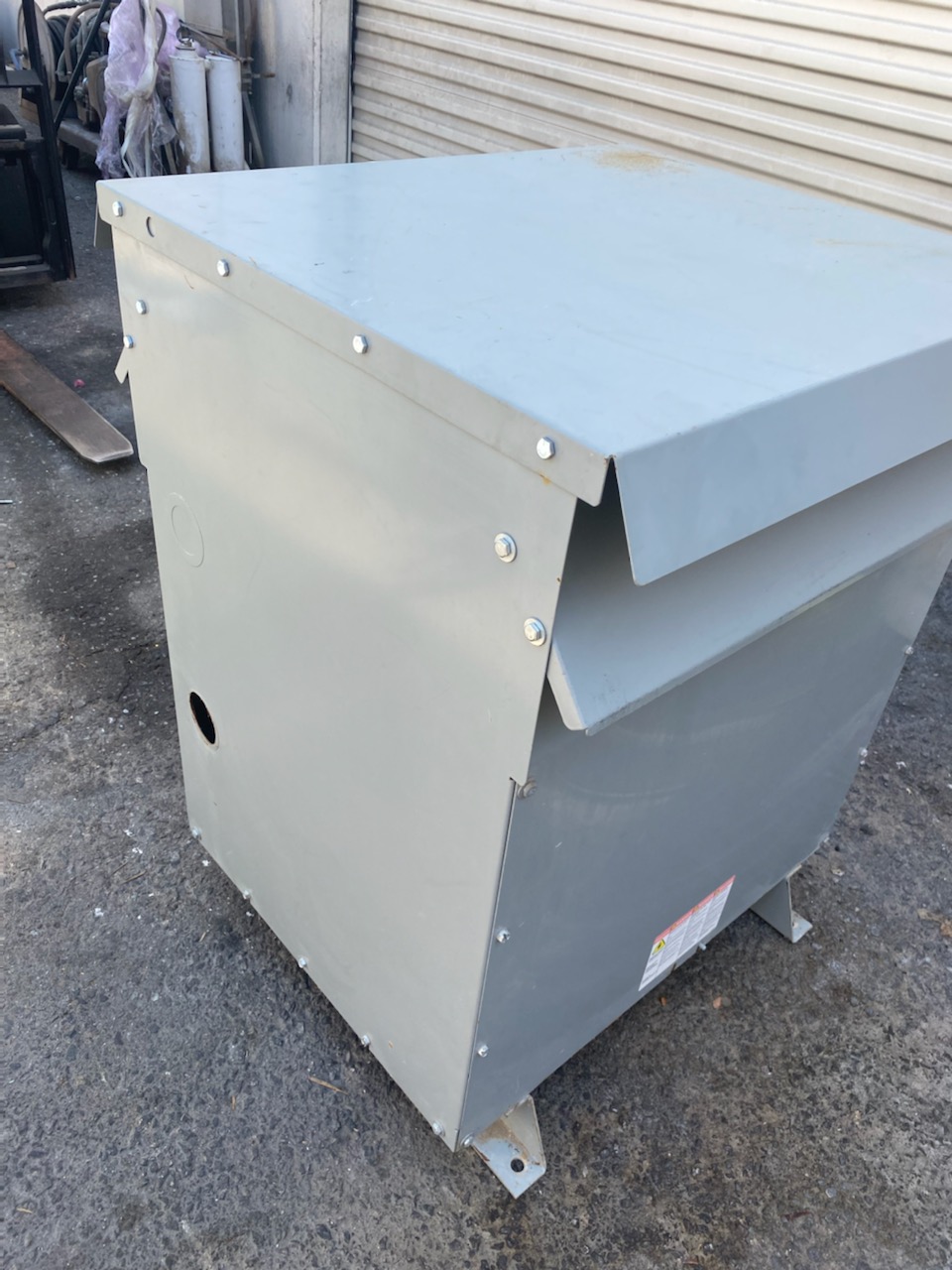
When someone calls us about a transformer, the first thing we ask for is a nameplate photo. That one image usually answers every pricing question at once. Here's what we're reading, field by field, so you know what you're selling.
kVA — the size, and most of the price
The kVA rating is the transformer's capacity and the single biggest value driver. A 75 kVA dry type is a few hundred dollars; a 2,500 kVA padmount can be five figures. Value scales up steeply because bigger units cost dramatically more new and are scarcer used.
Primary and secondary voltage
Common combinations sell fastest. 480 to 208Y/120 is the workhorse of American commercial buildings — always in demand. 12,470 or 13,200 primary padmounts match most utility distribution. Odd voltages narrow the buyer pool and soften the price; that's not a defect, just market math.
Type and fluid
Dry type (air-cooled, indoor) and liquid-filled (padmount, substation) are different markets. For liquid-filled units, the fluid matters enormously: mineral oil is standard, FR3 is fine, and anything suggesting PCBs (pre-1979 without a certified non-PCB label) needs testing before anyone can touch it. Date of manufacture on the nameplate settles most of that conversation.
- Dry type: check for winding damage and dust, otherwise simple
- Padmount/oil-filled: non-PCB verification is step one
- K-rated and harmonic-mitigating units: premium category from data centers
The fields that change the price, in order
Not every field on a nameplate matters equally for resale. kVA comes first because it defines the buyer pool. Primary and secondary voltage come second, since standard combinations resell quickly and unusual custom voltages narrow the market sharply. Phase is third — three-phase units serve commercial and industrial buyers, single-phase serves a different and generally smaller market.
After those three, the fields that matter are temperature rise and insulation class (they tell us how hard the unit has been worked and what it can tolerate), impedance (relevant to fault calculations for the next owner), and the manufacturing date, which tells us the generation and, for oil-filled units, usually settles the PCB question.
- kVA rating — defines who can use it
- Primary and secondary voltage — standard combinations sell fastest
- Phase — three-phase reaches the larger market
- Temperature rise and insulation class
- Impedance percentage
- Manufacturing date — generation and PCB context
When the nameplate is gone
Missing and unreadable nameplates are common on older units, and they do not end the conversation. Photograph the unit from several angles and include something for scale. Overall dimensions, the number and arrangement of bushings, tank construction, and cooling fin design all narrow down the class and approximate rating.
If there is any documentation nearby — a panel schedule, a one-line drawing, an old service tag, a maintenance sticker — photograph that too. Facility paperwork frequently records the rating even when the plate is long gone.
Worst case, we price conservatively against the uncertainty and tell you plainly that a confirmed rating would improve the number. That is better than guessing high and re-trading you at the dock, which we do not do.
What to send us
Two photos: the full nameplate, close and readable, and a step-back shot of the whole unit showing bushings or lugs. That's genuinely all we need for a firm range. Text them to (951) 903-9804 and the quote comes back fast — usually within the hour during business hours.