
Sell Electrical Equipment in Georgia
Georgia has quietly become a Southeast surplus powerhouse: Atlanta ranks among the nation's top data center markets, the Savannah port empire keeps building (and re-powering) warehouses, and the state's manufacturing recruitment wins keep older plant gear cycling out as new facilities rise.
Wherever in Georgia the gear sits, photos to (951) 903-9804 put a number on it fast.
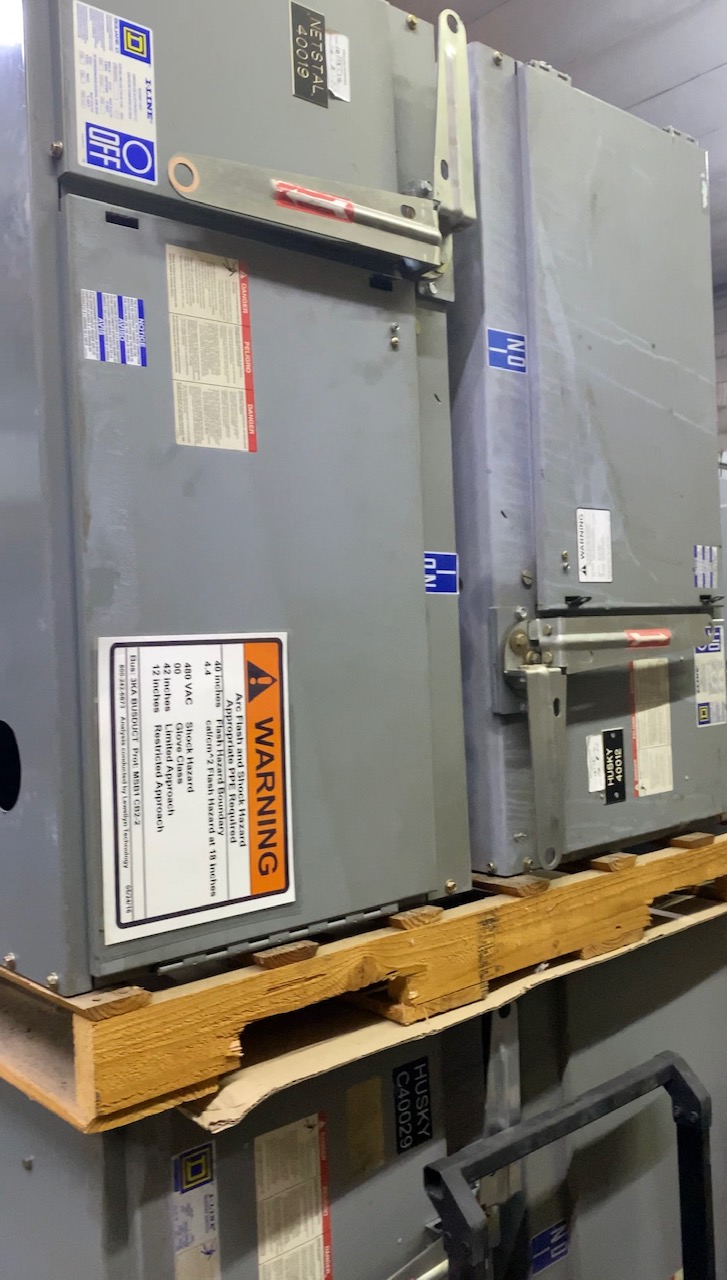
Georgia's growth throws off surplus
Atlanta's data center corridor — Douglas County, the westside clusters, and the downtown carrier hotels — refreshes electrical infrastructure on cycles that orphan near-new switchgear, PDUs, and busway. The metro's relentless TI economy adds contractor surplus in steady volume.
Savannah's port logistics boom mirrors the Inland Empire: warehouse turnover sheds bus plugs, panels, and dry types along the I-16 and I-95 corridors. Manufacturing transitions — auto and battery plants arriving, older facilities modernizing or closing — release MCC rooms and crib stock from Columbus to Augusta, while Georgia Power territory upgrades retire distribution assets statewide.
- Data center refresh lots from metro Atlanta
- Warehouse gear from the Savannah port corridor
- Plant MCCs from manufacturing transitions
- Contractor surplus from the Atlanta TI economy
- Utility retirements across Georgia Power country
Southeast freight that works
Georgia sits on major freight lanes, which keeps shipping simple: pallet lots of breakers and valuable gear ship prepaid on our account from anywhere in the state, and half-truckload-plus lots justify dedicated equipment. Data center and plant decommissions get the full crew treatment.
For the film industry's production facilities and the growing EV plant ecosystem — both heavy electrical users — we're glad to scope surplus from asset lists before gear ever hits the floor.
How selling to us works in Georgia
Nothing about the process changes because of where you are — only the logistics do. You send photos of the nameplates, labels, and the overall lineup. We read the ratings, check what the equipment is currently worth on the resale market, and come back with a number. If you take it, we schedule removal and you get paid when the gear leaves your floor. No consignment, no waiting to see what it sells for, no revised offer once the truck arrives.
For Georgia specifically, that means scheduled once the load is planned — usually two to three weeks for heavy gear, faster for palletized items. For full plant or facility decommissions we fly a crew in and send dedicated trucks. Distance has never stopped a good lot.
The only thing we ask is honest photos. If a breaker has a cracked case or a transformer has been sitting open to the weather, tell us — we still buy plenty of rough equipment, and knowing up front keeps the quote you get the quote you keep. Sellers around Atlanta who deal with us repeatedly do it because the second number always matches the first.
| Quote turnaround | Usually the same day, often within the hour |
|---|---|
| Pickup scheduling | once the load is planned — usually two to three weeks for heavy gear, faster for palletized items |
| Payment | At pickup — check, ACH, or cash |
| Freight and rigging | Arranged and paid by us |
| Main metros covered | Atlanta, Savannah, Augusta, Columbus, Macon |
What size lot makes sense from Georgia
We are straight about the math: breakers and high-value frames ship economically from anywhere in the country. For heavy switchgear and transformers, roughly half a truckload upward is what justifies a cross-country haul.
The reason the threshold exists at all is freight, and freight is the one cost that can turn a fair offer into a bad one. Rather than quote you a big number and then chip away at it, we build the transport into the offer from the start. If a lot is genuinely too small to move economically from your part of Georgia, we will tell you that instead of wasting your week.
Two things frequently change the math in your favor. First, combining loads: if you have several sites, or you can stage gear from multiple jobs in one place, a marginal lot becomes an easy one. Second, mixed lots — a few high-value breakers riding along with heavier, lower-value equipment often carries the whole load.
- Molded case and power breakers — ship economically from anywhere
- Panelboards, bus plugs, and switches — best palletized in quantity
- Dry type and padmount transformers — priced with rigging and freight included
- Full switchgear lineups and MCC rooms — scoped from an asset list, removed by our crew
- Multiple sites or staged loads — combine them and small lots become viable
What we look at when we price your equipment
People assume cosmetic condition drives the offer. It rarely does. What matters is whether the equipment can go back into service, and whether anyone is looking for that exact rating right now. A dusty breaker with a clean interior and a common frame size is worth real money. A spotless unit nobody needs is worth scrap.
In practice we are reading four things: the nameplate data, because ratings determine who can use it; the interior condition of contacts, bus, and windings; whether the unit is a current or legacy design, since obsolete parts for still-running plants can be the most valuable items in a lot; and completeness, because missing trip units, plugs, or hardware cost the next owner money.
This is also why we would rather see ten honest photos than a polished description. Georgia sellers send us pictures of nameplates, open cabinets, and any damage, and we price from those. It takes minutes and it is the difference between a guess and a real number.
| Raises value | Legible nameplate, complete unit, in-demand rating, clean interior |
|---|---|
| Neutral | Dust, faded paint, surface rust, scuffed enclosures |
| Lowers value | Missing trip units or hardware, water damage inside, burned or arced contacts |
| Usually still buyable | Obsolete gear, incomplete lineups, rough exteriors, unknown history |
Who sells to us in Georgia
Our Georgia sellers come from the same handful of situations, and they are shaped by the state's economy — logistics, data centers, manufacturing, film production and utilities. Electrical contractors are the most frequent: every finished job leaves over-ordered panels, breakers, and transformers that tie up shop space and shelf value. Facility and plant engineers come next, usually after an upgrade leaves perfectly good gear sitting where the new equipment needs to go.
Then there are the one-time sellers: demolition and abatement contractors clearing a building, property owners who inherited a full electrical room with a purchase, estate and business liquidations, and companies closing or consolidating a site. None of them are in the equipment business, and none should have to be — that is the whole point of calling a buyer who already knows what the gear is worth.
Whichever group you are in, the same rule applies: talk to us before anything goes in a scrap container. Scrap pays by the pound. We pay against what the equipment is worth to the next facility that needs it, which is frequently several times more.
- Electrical contractors across Atlanta, Savannah, Augusta and beyond
- Plant and facility engineers after equipment upgrades
- Demolition and decommissioning contractors
- Property owners and managers clearing electrical rooms
- Liquidators, estates, and closing or consolidating businesses
- Utilities and co-ops retiring distribution assets
Common questions
How do I get a quote?
Text photos of labels and nameplates to (951) 903-9804 — or call, a real person answers seven days a week. Most quotes come back within the hour.
Do you buy from Savannah-area warehouses?
Yes — port-corridor logistics buildings are a steady source, and their busway and panel lots ship easily.
How do Atlanta data center lots work?
Asset manifest or photos first, firm pricing fast, then removal crews staged against your room-release dates.
What do you pay for used electrical equipment in Georgia?
It depends entirely on the ratings and condition, so we will not pretend there is a price list. What we can promise is that the offer reflects current resale demand for your specific equipment, not a per-pound scrap rate, and that it includes freight and rigging so nothing gets deducted later. Send photos of the nameplates and you will usually have a number the same day.
Do you buy obsolete or discontinued equipment in Georgia?
Often it is the most valuable thing in the lot. Plants across Georgia are still running equipment that has not been manufactured in decades, and they need spares. Obsolete breakers, legacy switchgear, and old-line motor control are worth showing us before you assume they are worthless.
Who pays for freight and rigging out of Georgia?
We do, and it is built into the offer rather than deducted from it. We arrange the carrier, the rigging, and the loading; for larger industrial lots our own crew handles removal.
Do I need to remove the equipment before you buy it?
No. De-energized and disconnected is ideal for safety and speed, but removal itself is our job. For live or partially installed gear, coordinate the disconnect with your electrician and we will handle everything from the point it is safe to touch.
Related pages
Ready to sell? Call or text (951) 903-9804 or email photos to sellelectricalequipment@gmail.com.
Got equipment to sell?
Call or text us photos. We'll give you a price and take it from there.