
Plant Closing? Here's the Equipment Timeline That Works
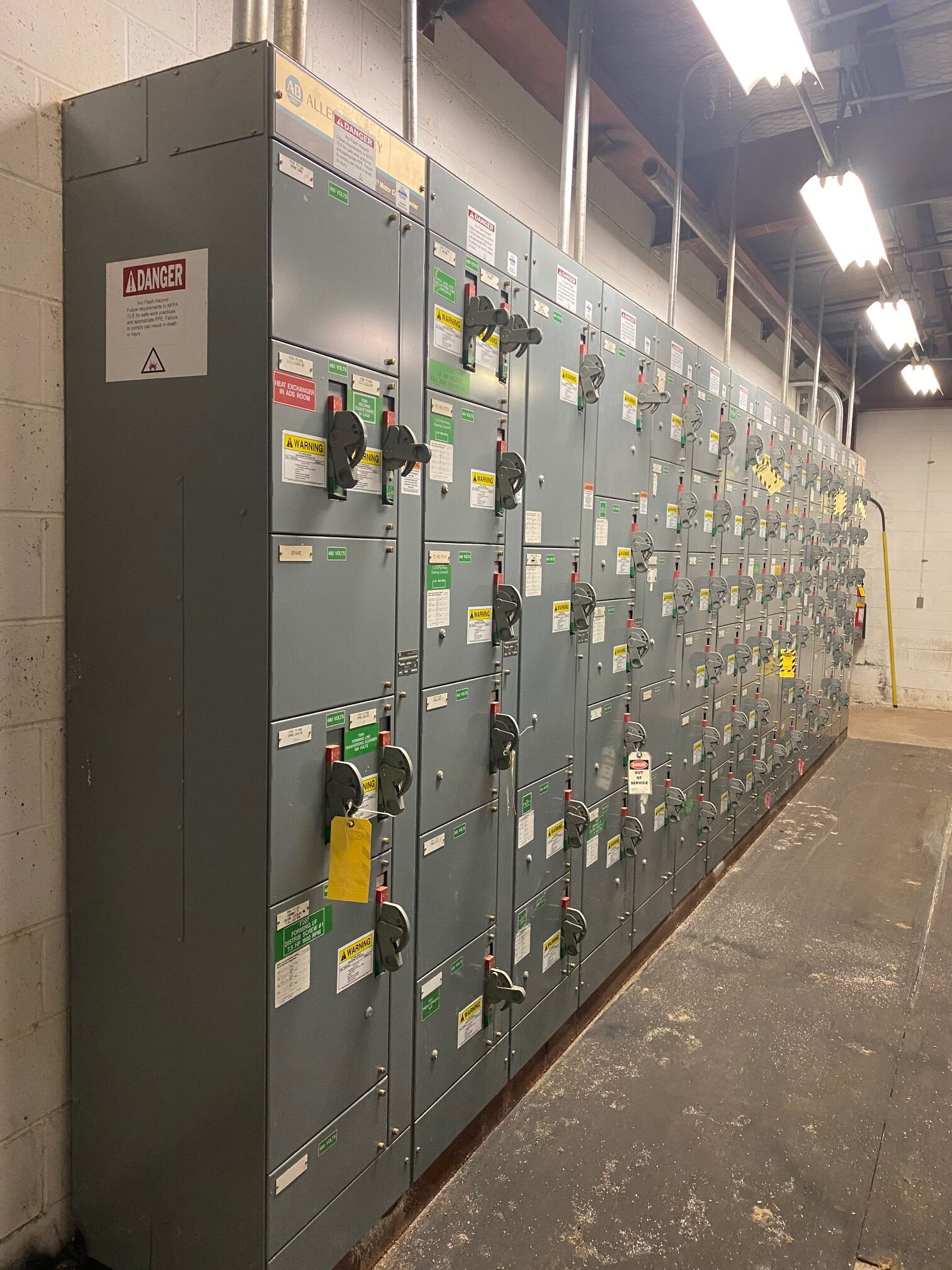
We've bought electrical rooms out of closing plants across the country, and the pattern is consistent: the recovery value is set less by what's in the building than by when someone starts dealing with it. Early calls get equipment prices; last-week calls get whatever fits on the final truck.
8-12 weeks out: walk and list
Someone with keys walks the plant with a phone: MCC rooms, switchgear, the transformer yard, the maintenance crib, the drive cabinets. Photograph nameplates and shelves. If an asset list exists from accounting, even better — catalog numbers let a buyer quote whole rooms sight-unseen. Send the batch; get the lot quoted while every option is still open.
4-8 weeks out: sequence the removal
Now removal gets scheduled around the shutdown: crib and spare inventory can leave anytime, production-line electrical goes after final run, main gear goes last after the utility cut. A good buyer coordinates with your remaining maintenance staff and the landlord's deadlines, provides insurance certs, and works inside LOTO procedures.
- Crib stock: sell first, it's pure surplus already
- Line electrical: after final production run
- Main switchgear and transformers: after de-energization
Sequencing a closure so the electrical scope pays
Closures run on a timeline, and electrical equipment gets its value decided early — usually before anyone realizes a decision was made. The sequence that protects value is straightforward: inventory the electrical scope while everything is still in place, get it priced as a whole, then schedule removal inside the demolition window.
What destroys value is the reverse order: letting general demolition start first and pricing whatever survives. By then the panels are stripped, the switchgear bus is cut, and the spare-parts crib has been thrown into a container.
- Inventory the electrical scope before demolition begins
- Price the whole scope at once, not piecemeal
- Include the spare-parts crib in the inventory
- Schedule removal inside the demolition window
- Keep assemblies intact until they are evaluated
The spare-parts crib is usually the surprise
In plant after plant, the highest-value electrical material is not the equipment on the floor — it is the shelves of spares accumulated so the line would never wait on a part. Matching MCC buckets, starters, overloads, spare breakers for the installed switchgear generation.
That inventory is valuable precisely because it is matched. Another plant running the same generation of equipment cannot buy those parts new, and assembling an equivalent set from scratch is nearly impossible. Sold as a set it is worth considerably more than the same items scattered across scrap bins.
So when you build the closure inventory, walk the storeroom before the production floor, and photograph the shelves as they sit.
The last weeks: paper and payment
Payment happens at pickup — check or cash — with itemized settlements your accounting team can reconcile. What you avoid by starting early: the dumpster-rental panic where working gear rides to the shear because the lease ends Friday.
Closing a facility? Send the walkthrough photos to (951) 903-9804 whenever you're ready — quoting early costs nothing and locks nothing.