
Sell Your Switchgear & Panelboards
Switchgear is the biggest thing we buy and the hardest thing for an owner to sell alone. It's bolted to the floor, wired to everything, and weighs as much as a truck. Most buyers won't touch it. We bring the crew that unbolts it, breaks it down, and loads it — at our cost, priced into the offer upfront.
Send us photos of the lineup — the full front, the nameplates, and a few open-door shots of the guts — and we'll quote the whole thing. If it's a big lineup, we'll come look in person.
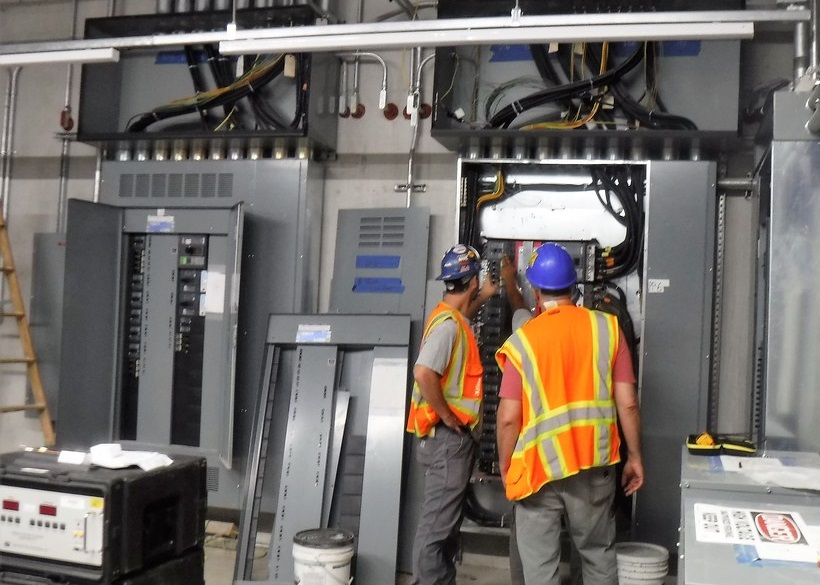
What counts as switchgear to us
Low voltage switchgear and switchboards (480V class) are the most common — main service sections, distribution sections, and the drawout breakers inside them, which are often the most valuable part of the whole lineup. We also buy medium voltage gear (5kV/15kV), metal-clad and metal-enclosed, plus panelboards and distribution panels of every size.
The value drivers are the breakers inside, the bus material (copper beats aluminum), the vintage, and whether the sections can be reused as-is. Even a lineup that's headed for recovery carries real money in copper bus.
- Low voltage switchgear and switchboards
- Medium voltage switchgear — 5kV and 15kV class
- Drawout air and insulated case breakers
- Panelboards, distribution panels, and interiors
- Unit substations — transformer plus gear together
We do the disassembly, not you
The reason switchgear sits abandoned in electrical rooms is that removing it is genuinely hard. Our crew does this weekly: de-energized verification with your electrician, unbolting sections, splitting shipping breaks, rigging out through whatever door, hallway, or loading dock exists, and sweeping the room when we're done.
For demolition contractors this matters twice: we get the gear out on your schedule, before the abatement or wrecking crews need the floor. Tell us your demo date — we work around it.
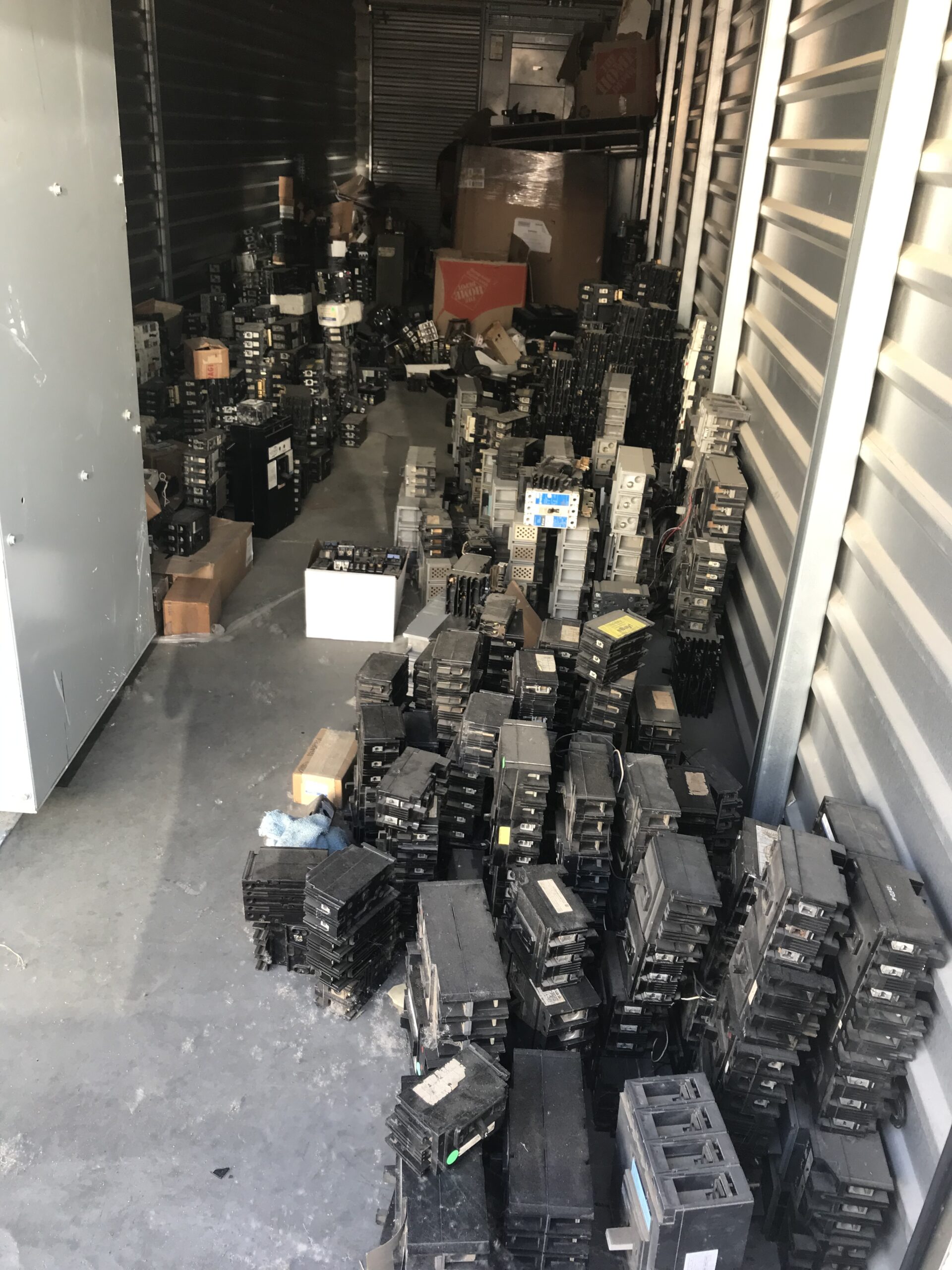
Panelboards: the overlooked money
Every remodel tears out panelboards, and most of them go in the dumpster. That's cash in the dumpster. A loaded 42-circuit panel with its breakers is worth real money; even the interiors alone — bus, breakers, mains — are worth pulling. If your crews are re-powering a building, put a pallet aside and text us a photo when it's full.
What switchgear is actually worth
Switchgear is valued two ways at once: as a complete assembly, and as the sum of its parts. A complete, matched lineup that can be re-installed is worth the most. But even when a lineup cannot be reused whole, the breakers, instrument transformers, relays, and bus inside it often carry more value than the steel does.
Manufacturer and vintage matter here more than in most categories, because switchgear is what plants keep running for forty years. Legacy Westinghouse, GE, ITE, and Allis-Chalmers lineups feed a replacement-parts market that has no new-production alternative — which is exactly why scrapping a lineup is usually the most expensive decision on a decommissioning job.
| Complete matched lineup, reusable | Highest — priced as an assembly |
|---|---|
| Partial lineup or mismatched sections | Priced by component value |
| MV switchgear with drawout breakers | Strong; breakers often lead the value |
| LV switchboards and distribution sections | Steady demand |
| Legacy/obsolete lineups | Parts market can exceed assembly value |
| Relays, CTs, PTs, meters | Bought separately; do not discard |
Selling switchgear out of a live facility
Start with an asset list or single-line if you have one — it tells us more in thirty seconds than an hour of photos. If you do not have documentation, photograph the front nameplates of each section, the breaker labels, and the overall lineup end to end.
Access drives the removal plan: how many sections, whether the room has a path wide enough, dock or grade access, and whether rigging has to come through an occupied building. Tell us your outage or demolition window early — we schedule around it, including nights and weekends, rather than asking the project to wait.
Do not let a demolition crew torch a lineup before we have looked at it. Cut bus and damaged breakers turn a reusable assembly into scrap in about ten minutes.
- Send an asset list or single-line drawing if one exists
- Photograph section nameplates and breaker labels
- Note section count, room access, and dock or grade path
- Give us the outage or demo window up front
- Never torch or cut before the lineup is evaluated
Before you scrap anything, send one photo
Scrap is priced by weight. Used electrical equipment is priced by what the next facility needs, and those two numbers are rarely close. A scrapyard has no reason to tell you that the item in your hand keeps a plant running somewhere.
There is no cost to finding out. Text photos to (951) 903-9804 — labels and nameplates if you can get them, wide shots if you cannot — and you will have a real number, usually the same day. If the honest answer is that your lot is only worth scrap, we will tell you that too, and you have lost nothing but a text message.
Common questions
Do you buy energized equipment?
No — everything must be de-energized and disconnected by a qualified electrician before our crew touches it. Once it's cold, we handle the rest.
What photos do you need for a switchgear quote?
The full lineup from the front, every nameplate, and open-door shots showing the breakers and bus. If you can get a shot of the one-line diagram sticker, even better.
How fast can you remove a lineup?
For most jobs, we're on site within days of agreeing on price — within 24 hours when a demo schedule demands it. The removal itself usually takes a day.
Is old switchgear worth anything if the breakers are gone?
Usually yes — copper bus, current transformers, and reusable sections still carry value. Less than a complete lineup, but never zero. Send photos before you call the scrapper.
Can you remove switchgear from an occupied building?
Routinely. Off-hours rigging, freight-elevator and dock scheduling, insurance certificates, and coordination with the GC or building engineer are all normal parts of the job.
Is old switchgear worth anything if it cannot be reused?
Usually yes, because the breakers, relays, and instrument transformers inside serve a replacement market for plants still running that generation of gear. Value by parts often beats value by weight substantially.
Related pages
Ready to sell? Call or text (951) 903-9804 or email photos to sellelectricalequipment@gmail.com.
Got equipment to sell?
Call or text us photos. We'll give you a price and take it from there.