
The PCB Question: Checking Your Transformer Before You Sell
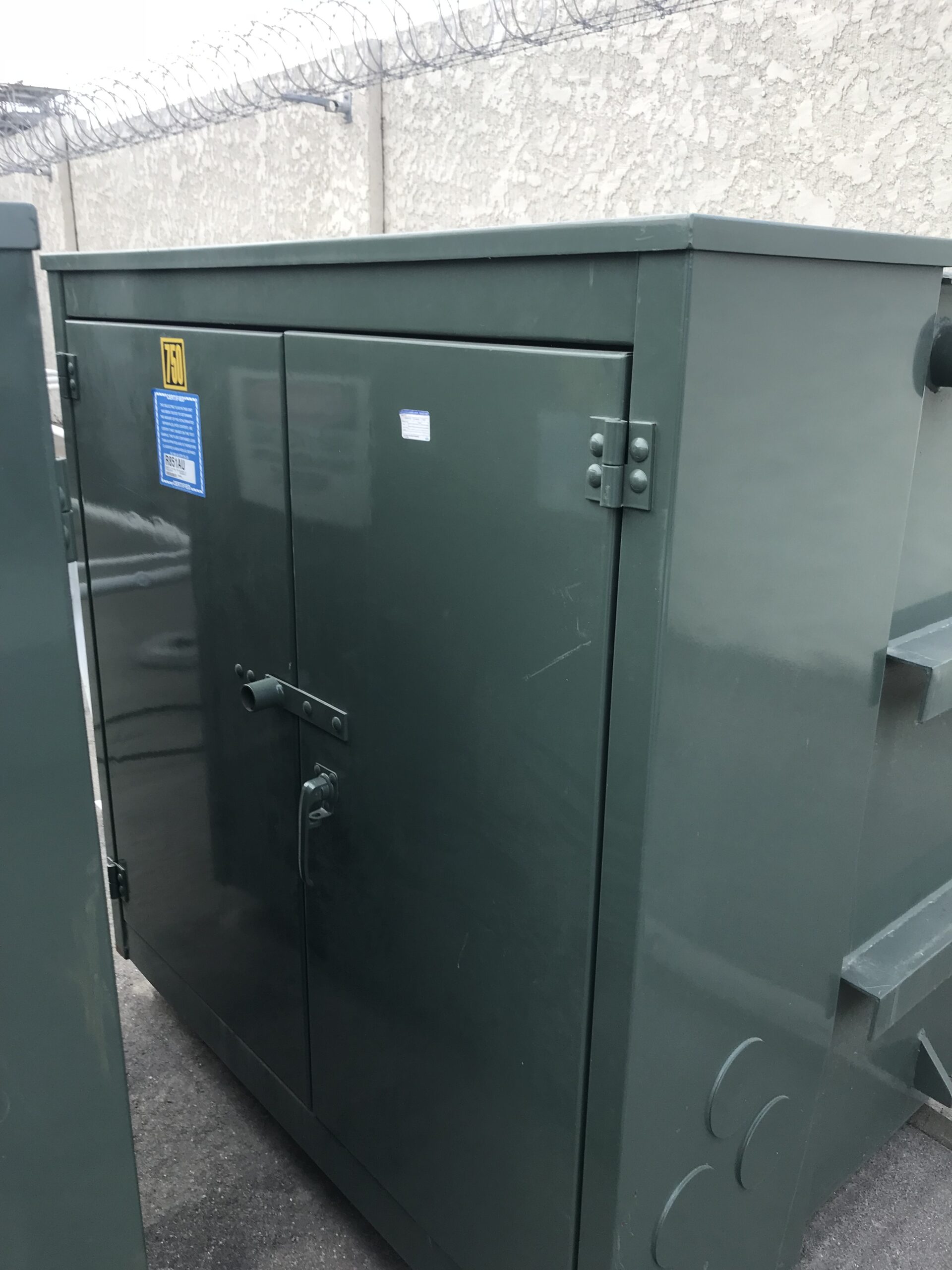
Every oil-filled transformer conversation we have eventually arrives at the same three letters: PCB. Polychlorinated biphenyls were used in transformer fluid until the late 1970s, they're heavily regulated, and they're the difference between a unit we can buy this week and one that needs testing first. The good news: for most units, the answer is already printed on the tank.
Start with the date
PCBs were banned from new equipment in 1979. A transformer manufactured after roughly 1980 is essentially always non-PCB from the factory, and its nameplate date settles the question. Units from the late '70s transition years deserve a closer look, and anything older needs verification unless it's been retrofilled and labeled.
Look for the labels
Many older units were retrofilled — drained and refilled with clean fluid — and carry a green or blue "NON-PCB" or "PCB-free" sticker, often with a certification date. Utility-owned units frequently have test documentation stenciled or tagged on. Photograph any such label along with the nameplate; it directly affects both salability and price.
- Post-1980 nameplate date: effectively settled
- "NON-PCB" retrofill label: settled, photograph it
- Pre-1979, no label: needs an oil test — not a dealbreaker
How to read PCB status off the unit
Most of the time the unit answers the question itself. Manufacturing date is the first check: units built after 1979 are generally non-PCB, and many nameplates from that era carry an explicit non-PCB marking. Some units have a separate label or stamp addressing PCB content directly.
Fluid type is the second clue. Nameplates often name the insulating fluid, and mineral oil versus askarel-type fluids points strongly one way or the other. Where the plate is silent and the unit predates 1980, testing is the honest path rather than assuming.
- Manufacturing date — post-1979 generally non-PCB
- Explicit non-PCB marking on many nameplates
- Fluid type named on the plate
- Separate PCB labels or stamps on some units
- Testing where the plate is silent and the unit is older
What a positive result actually means for you
A PCB-positive unit is a handling and disposal question, not automatically a worthless one. It changes how the unit must be transported and processed, and it changes the economics — but it does not mean nobody will deal with you.
What matters is that a buyer tells you plainly. We would rather say 'this unit tests high, here is what that means for value and disposal' than go quiet after a conversation, which is a common experience sellers describe with other buyers.
Either way, do not drain the fluid. Drained units are harder to move safely, and fluid handling and containment are our responsibility, not yours.
When testing is needed
An oil sample tested at a lab (a routine, inexpensive service) returns a ppm number: under 50 ppm is non-PCB and freely sellable. We coordinate testing on units worth the trouble — a big substation transformer easily justifies it. What we won't do is move an unverified pre-1979 unit, and neither should you.
Not sure what you've got? Send the nameplate and any labels to (951) 903-9804 — we read these tanks every week and we'll tell you exactly where yours stands.