
Bus Plugs: The Money Hanging From Your Ceiling
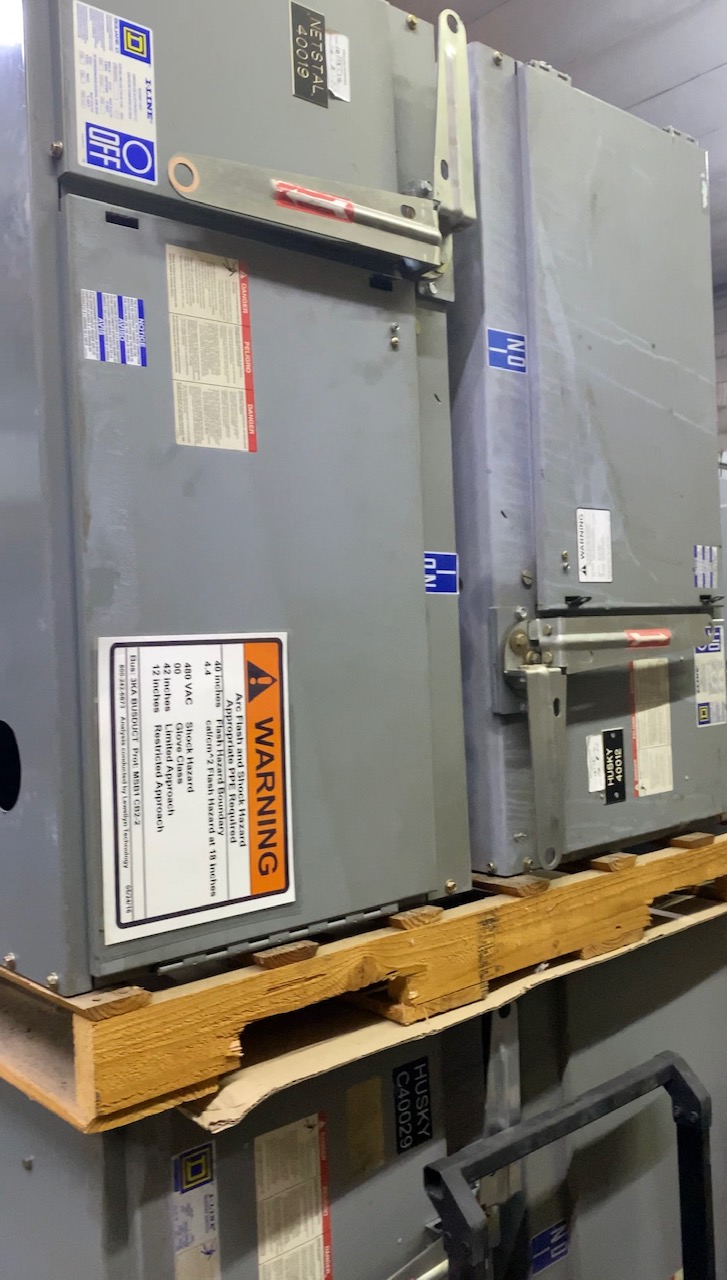
If there's one item we wish every demolition contractor and warehouse owner knew about, it's the humble bus plug. They hang off overhead busway runs in every industrial building built from the 1950s on, they look like nothing, and they are one of the most reliably underpriced items in the surplus world.
Why the demand never dies
Busway systems live as long as the building, and expanding a system means finding plugs that match it — same brand, same series, same stab style. Manufacturers discontinued many of those series decades ago, so when a plant adds a machine to a 1965 Square D or ITE busway run, the matching plug comes from surplus or it doesn't come at all. That's permanent scarcity demand.
What they're worth
As scrap: a few dollars of steel and copper. As equipment: commonly $50 to several hundred each depending on brand, amperage, and type (fusible vs. breaker), with big or rare units going higher. A warehouse ceiling with thirty plugs is often a four-figure lot that takes one afternoon to harvest.
- Square D, ITE/Siemens, GE, Westinghouse: all sellable
- Fusible and breaker types both wanted
- Higher amperage = higher value, as always
Why the series designation decides everything
Busway is the least interchangeable category in electrical surplus. A bus plug only fits the manufacturer and series of busway it was built for, so the series designation is not a detail — it is the whole basis for whether your plugs have a market.
That is why a photo of the plug label is worth more here than in any other category. Manufacturer, series, amperage, and voltage together tell us how many installed systems your parts fit, and that number is the price.
- Manufacturer and series — the critical identifiers
- Amperage: mid-range sizes turn over fastest
- Fusible versus breaker type — both sell
- Matched busway runs raise the value of plugs
- Elbows, tees, and end feeds are worth including
Clearing busway out of a warehouse
Most of this material comes out of warehouse conversions and tenant demolitions, which run on tight schedules. The efficient approach is to photograph plug labels and the busway nameplate early, count plugs by amperage, and measure total footage — that is enough to price the lot without a site visit.
Handling matters more than people expect. Palletize plugs so they are not sliding loose, and keep busway lengths banded and supported. Deformed sections lose value because the next owner cannot make a straight run out of them.
If the run is still installed and you are unsure what you have, send photos before removal. Matched sets are worth more than parts, and knowing that before the crew starts changes how the removal is done.
Selling them is easy
Photograph the label side of a few representative plugs, count the total, and text it to (951) 903-9804. They palletize easily and ship prepaid on our account, or ride our truck with the rest of your lot. Before any warehouse demo or re-power, look up — the ceiling is often the best-paying part of the building.