
Transformer Buyers in Colorado
Front Range growth and DJ Basin consolidation both end the same way: transformers looking for a buyer. We're it.
We're a second-generation family buyer — 20+ years buying surplus transformers nationwide from our Corona, California yard. Colorado sellers deal directly with the person writing the check: text photos to (951) 903-9804 and you'll usually have a number the same day.
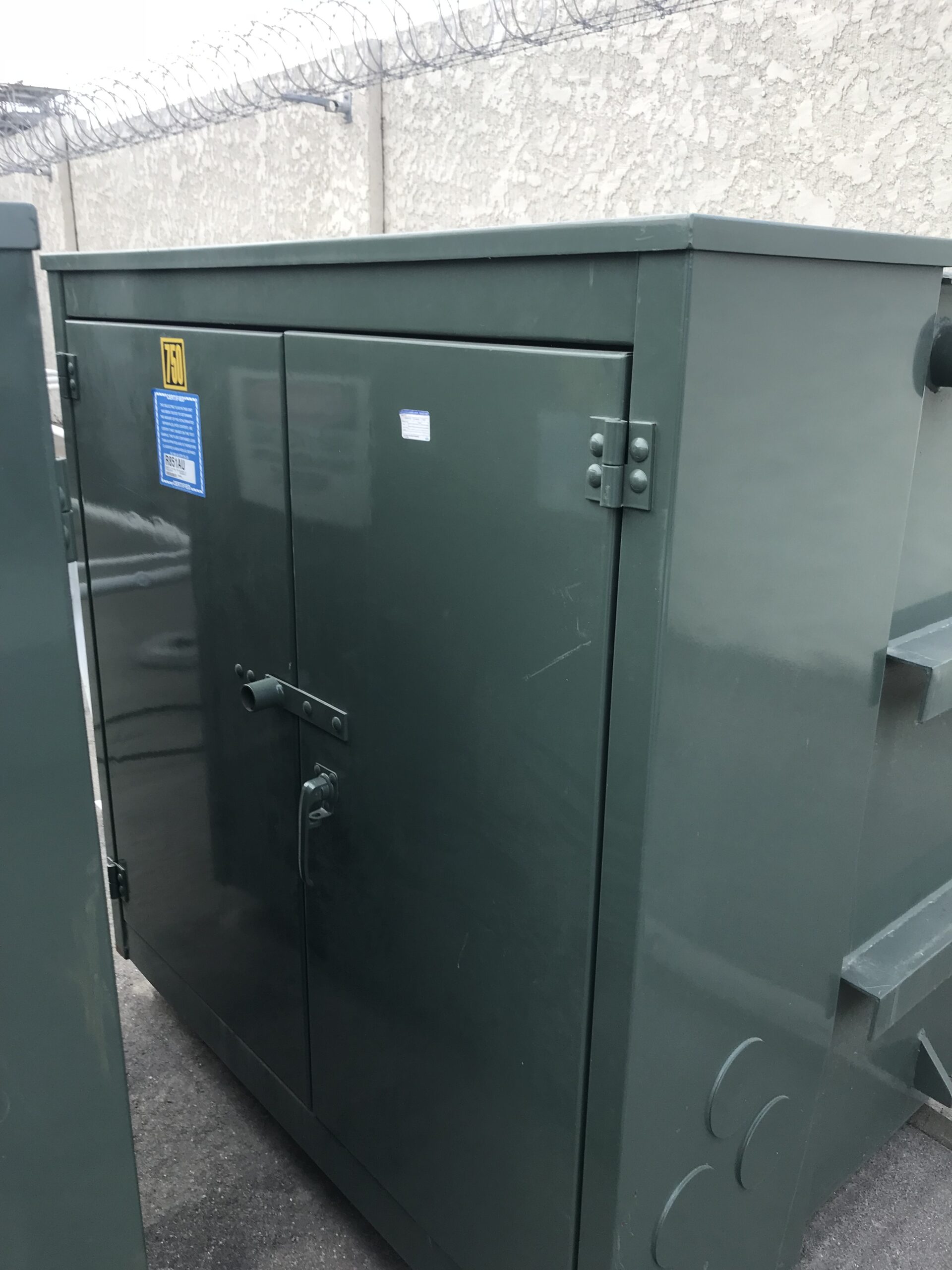
Where Colorado's transformers come from
Denver and Colorado Springs data center builds replace units early; DJ Basin operators idle padmounts as pads consolidate; marijuana-era grow facility conversions orphan heavy dry types; mountain resort infrastructure upgrades add specialty units.
- Transformer pickups in and around Denver
- Transformer pickups in and around Colorado Springs
- Transformer pickups in and around Aurora
- Transformer pickups in and around Fort Collins
- Transformer pickups in and around Boulder
What we buy in Colorado
Dry-type units from 15 kVA to 1,500 kVA, padmounts, oil-filled substation transformers, control transformers by the pallet, and never-energized new surplus. Working, pulled, or sitting in the weeds — condition changes the number, not the answer.
Scrapyards pay copper weight. We pay against the replacement market — for a working unit with a readable nameplate, that's routinely several times scrap value.
Logistics and payment in Colorado
Colorado sits on our regular mountain-west route. Oilfield padmount pickups are routine — coordinates and photos are enough to dispatch the truck.
The process never changes: photos first, a real number second, and payment in full at pickup — cash, check, or wire, your choice. No consignment, no 'we'll settle after resale,' no waiting.
What determines what your transformer is worth
Transformer pricing comes down to four things, and none of them is how clean the paint is. First is the kVA rating, because that sets the pool of buyers — 75 to 500 kVA moves fastest since that is what most commercial buildings need. Second is voltage configuration: standard primary and secondary combinations resell quickly, while unusual custom voltages narrow the market considerably.
Third is type and cooling. Dry-type units are simple to move, store, and reinstall, which keeps demand steady. Oil-filled and padmount units carry higher copper content and higher value, but also require fluid handling and heavier equipment, which we account for in the offer rather than surprising you with later. Fourth is age and condition of the windings and bushings — that is what tells us whether the unit goes back into service or gets parted out.
The single most useful thing you can send us is a clear photo of the nameplate. Everything above is printed on it. Colorado sellers who send nameplate photos typically have a number back the same day; sellers who send only wide shots of the yard end up waiting while we ask follow-up questions.
| Dry-type, 15–1,500 kVA | Steady demand; the easiest units to sell |
|---|---|
| Padmount, single and three phase | Strong value; we handle rigging and fluid |
| Oil-filled substation class | Highest value per unit; heavy haul arranged by us |
| Control and instrument transformers | Bought by the pallet, not individually |
| New surplus, never energized | Premium — closest thing to wholesale pricing |
Oil, PCBs, and the questions sellers worry about
Everyone with an oil-filled unit asks the same two questions: does the fluid disqualify it, and what about PCBs. Neither is usually the problem people expect. We move oil-filled transformers routinely with proper containment and DOT-compliant transport, and the fluid being old or dirty does not kill a deal — it is a line item, not a dealbreaker.
PCBs matter, but they are also knowable. Units manufactured after 1979 are generally non-PCB, and most nameplates from that era say so directly. Older units can be tested, and if a unit does test high we will tell you plainly what that means for its value and disposal rather than quietly walking away.
What genuinely does complicate a sale is an unknown history combined with no nameplate. If the plate is missing or unreadable, photograph the unit from several angles anyway — dimensions, bushing arrangement, and tank construction often let us estimate the class well enough to make an offer on Colorado units.
- Post-1979 units are generally non-PCB and priced normally
- Old or discolored fluid is a cost line, not a disqualification
- We arrange containment, spill kits, and compliant transport
- Testing is available when a unit's status is genuinely unknown
- Missing nameplate does not end the conversation — send photos anyway
Getting a transformer out of a Colorado site
Removal is the part sellers most often assume they have to solve first. They do not. Once a unit is de-energized and disconnected by a qualified electrician, everything after that is our problem: rigging, forklifts or cranes where needed, containment for oil-filled units, and the trailer that suits the weight.
Access is what we actually plan around, and it varies by site more than by state. Basement vaults, roof-level pads, indoor rooms with a single narrow door, and pads that have been landscaped in all change the equipment we bring. Photos that show the path out — doorways, stairs, dock height, overhead clearance — are worth more to us than photos of the transformer itself.
We schedule Denver, Colorado Springs, Aurora and other Colorado pickups around your operational reality, including nights and weekends when a facility cannot lose the space during business hours.
Scrap value versus resale value on transformers
A scrapyard prices your transformer as copper, aluminum, steel, and a disposal cost for the fluid. That number is real, and for a burned-out or genuinely dead unit it may be the right number. But for a working transformer with a legible nameplate, it is usually a fraction of what the unit is worth to a facility that needs exactly that rating.
The difference exists because replacement lead times are long. A building that loses a 480V transformer does not want to wait months for a new one, and that urgency is what puts real money into the used market. When we buy your unit we are buying into that demand, which is why we can pay above scrap and still make our margin.
The practical advice is simple: get a scrap quote if you want a floor, then send us nameplate photos before anything gets cut up. It costs you one text message, and on Colorado units it frequently changes the number substantially.
Common questions
How do I sell my transformers in Colorado?
Text photos of the equipment and nameplates/labels to (951) 903-9804, or use the quote form. Most Colorado lots get a firm number the same day, and we handle all freight and rigging.
Do you cover all of Colorado or just Denver?
All of it. Denver, Colorado Springs, Aurora, Fort Collins see us most often, but our trucks reach every county — for larger lots, distance is never the issue.
How fast do I get paid?
At pickup. We verify the equipment on site and pay before it leaves your dock — cash, company check, or same-day wire.
What size transformers do you buy in Colorado?
Dry-type units from about 15 kVA up through 1,500 kVA, padmounts in single and three phase, and oil-filled substation-class units above that. We also buy control transformers in pallet quantities. If you are unsure where yours falls, the kVA rating is on the nameplate — send a photo of it.
Do you buy transformers that do not work?
Sometimes, and it depends on why. A unit with a failed winding is generally a parts or scrap proposition, and we will say so. A unit that simply has not been energized in years, or was pulled during an upgrade while still functional, is normal used stock and prices normally.
What about the oil — do I need to drain it first?
No. Do not drain it. We handle oil-filled units with proper containment and compliant transport, and a drained unit is actually harder to move safely. Leave it as it sits and let us plan the removal.
Do you buy just one transformer, or do I need several?
One is fine, especially for padmounts and larger units where a single transformer justifies the trip. Small dry-type units are best sold in groups or alongside other equipment. Tell us what you have and where in Colorado it sits, and we will be straight about whether it makes economic sense.
Related pages
Ready to sell? Call or text (951) 903-9804 or email photos to sellelectricalequipment@gmail.com.
Got equipment to sell?
Call or text us photos. We'll give you a price and take it from there.